
Macarons trace their roots to the Italian city of Siena, where they were first known as sweet treats. In the 16th century, Catherine de Medici brought the delicate almond meringue to France, where it eventually evolved into the iconic French macaron we adore today. The evolution was slow, but the result is a confection that balances crispness and chew, a tiny edible celebration.
Why You'll Love It
-
- Simple ingredients you likely already have
-
- No fancy equipment required
-
- The satisfaction of mastering a classic French pastry
-
- Versatile flavors for any occasion
"These macarons turned out so light, they practically melted on my tongue!"
Essential Ingredient Guide
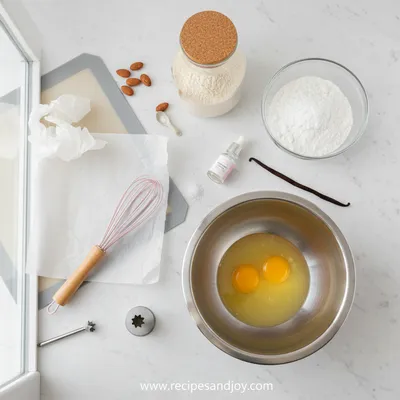
- Almond flour: Choose finely ground, unblanched almond flour for a smooth shell and subtle nutty aroma.
- Egg whites: Use fresh, room‑temperature egg whites; they whip up to a glossy meringue more easily.
- Powdered sugar: Sifting with the almond flour eliminates lumps, giving the shells a perfect texture.
- Granulated sugar: Adds stability to the meringue and helps achieve that delicate crunch.
- Lemon zest: A tiny amount brightens the flavor without overwhelming the almond base.
- Heavy cream: Creates a silky ganache filling that contrasts the crisp shell.
Complete Cooking Process
-
Ingredient Readiness:
Sift almond flour and powdered sugar together twice; age egg whites for 24 hours for best volume.
-
Flavor Development:
Whisk the meringue to stiff peaks, then gently fold in the dry mixture to keep air in the batter.
-
Texture Control:
Pipe consistent circles, then let them rest until a skin forms—about 30‑45 minutes.
-
Finishing Touches:
Bake gently, then sandwich shells with freshly made ganache or buttercream.
-
Serving Timing:
Allow macarons to mature in the refrigerator for at least 12 hours; they taste best the next day.
-
Use a kitchen scale for precision, especially with almond flour.
-
Tap the baking sheet after piping to release air bubbles.
-
Avoid opening the oven door early; it can cause cracking.
-
Store in an airtight container with a paper towel layer.
Pro Tips
These little adjustments make a world of difference. I remember the first time I missed the resting step—yeah, the shells cracked all over. Now I never skip it, and the results are consistently smooth. Take a breath, trust the process, and enjoy the calm that comes with coaxing those shells into perfection.
The essence of the dish:
A macaron is essentially two crisp, airy shells with a luscious filling. The contrast of texture—crack, melt, chew—is what makes it unforgettable.
A fun fact or historical angle:
While the French perfected the macaron in the 19th century, the modern double‑shell version was popularized by Parisian pâtis‑school Ladurée in the early 1900s.
Flavor or sensory focus:
The sweet almond scent, the subtle bite of lemon zest, and the buttery richness of the ganache combine to create a balanced palate experience.
You Must Know
-
Shells should be smooth, not cracked
-
Resting time is essential
-
Avoid over‑mixing the batter
Frequently Asked Questions
→ Why do my shells crack?
Cracking usually means the shells were under‑rested or the oven temperature was too low. Give the piped batter a proper skin before baking.
→ Can I use food coloring?
Yes, add a few drops of gel or paste coloring to the batter after folding. Too much liquid can affect the texture, so use sparingly.
→ How long can I store macarons?
Stored in an airtight container, they keep for up to 5 days in the fridge. Let them come to room temperature before serving.
→ Can I make them gluten‑free?
All ingredients are naturally gluten‑free, just verify that your almond flour and powdered sugar are labeled as such.
→ What if I don’t have a pastry bag?
A Zip‑lock bag with a small corner snipped works fine for piping the batter.
→ Do I need to age egg whites?
Aging helps stabilize the whites, but if you’re short on time, you can skip it and still achieve decent results.
Nutrition Facts
per serving
120
Calories
2g
Protein
12g
Carbs
8g
Fat
Taste Profile
Delicate almond sweetness balanced by buttery ganache
Ingredient Substitutions
Don't have an ingredient? Try these alternatives
Will change flavor and color; sift well.
Creates a dairy‑free ganache with a subtle coconut note.
Recipe Variations
Try these delicious twists on the original
Spicy Version
Add a pinch of cayenne and raspberry jam for a sweet‑heat surprise.
Mediterranean Style
Fold crumbled pistachios and orange zest into the shells, and fill with honey‑cinnamon buttercream.
Common Mistakes to Avoid
Learn from others' mistakes for perfect results
- Skipping the resting step, which leads to cracked shells.
- Over‑mixing the batter, causing dense, flat macarons.
- Baking at too high a temperature, resulting in browning.
Meal Prep & Storage
Make Ahead Tips
Prepare the shells up to a day in advance, store them airtight. Fill just before serving for optimal texture.
Leftover Ideas
Store assembled macarons in the fridge; re‑temper at room temperature before enjoying.
Perfect Pairings
Serve this with...
Cooking Timeline
Sift dry ingredients and whisk egg whites to soft peaks.
Add sugar, reach stiff peaks, fold dry mix.
Pipe shells, let rest until skin forms.
Bake shells, cool, and prepare ganache.
Assemble macarons and refrigerate.
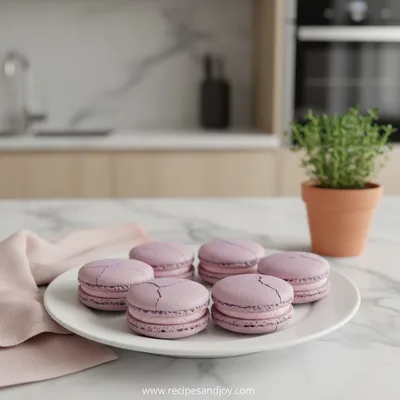
French Macarons – Beginner Friendly Recipe
Learn how to make perfect French macarons with this beginner-friendly recipe—crisp shells and creamy filling await!
Timing
Prep Time
30 Minutes
Cook Time
20 Minutes
Total Time
50 Minutes
Recipe Details
Ingredients
Shells
-
01
1 cup (100g) almond flour
-
02
1 cup (120g) powdered sugar
-
03
3 large egg whites, room temperature
-
04
¼ cup (50g) granulated sugar
-
05
½ tsp vanilla extract
-
06
Pinch of salt
-
07
Optional: food coloring
Filling
-
01
½ cup (120ml) heavy cream
-
02
200g dark chocolate, finely chopped
-
03
1 tsp butter
-
04
1 tsp lemon zest
Instructions
Sift the almond flour and powdered sugar together into a bowl; set aside.
In a clean bowl, whisk egg whites until foamy, then gradually add granulated sugar, whisking to stiff, glossy peaks.
Fold in vanilla, salt, and any food coloring, then gently fold the sifted dry ingredients into the meringue until the batter flows like lava.
Pipe 1‑inch circles onto parchment‑lined baking sheets; tap sheets to release bubbles and let rest 30‑45 minutes until a skin forms.
Preheat oven to 300°F (150°C). Bake shells 14‑16 minutes, rotate halfway. Let cool completely before removing.
Meanwhile, heat heavy cream until just simmering, pour over chopped chocolate, let sit 1 minute, then whisk until smooth; stir in butter and lemon zest.
Pipe a small amount of ganache onto the flat side of a shell, sandwich with another shell, and gently press.
Refrigerate the assembled macarons for at least 12 hours to develop flavor.
Notes & Tips
-
1
If shells spread too much, the oven may be too hot; lower temperature by 10‑15°F.
-
2
For uniform color, add food coloring after the meringue reaches soft peaks.
-
3
Silicone mats can be used instead of parchment for easier release.
Tools You'll Need
-
Kitchen scale
-
Sieve
-
Electric mixer
-
Pastry bag with plain tip
-
Parchment paper
-
Baking sheet
-
Spatula
Must-Know Tips
-
Don't over‑mix the batter; you’ll lose air and the shells will be dense.
-
Let shells rest; a skin prevents cracks.
-
Use an oven thermometer to ensure accurate temperature.
Professional Secrets
-
Age egg whites for 24 hours for extra stability.
-
Use a low, steady heat to avoid browning the shells.
-
Cool the ganache slightly before piping for a glossy finish.

Recipe by
Lily AndersonLife is sweeter with dessert 🍰💕 Baking joy, spreading smiles, and loving every sprinkle ✨
Get Delicious Recipes Weekly
Join 25,000+ home cooks getting our best recipes straight to their inbox.
Free forever • No spam • Unsubscribe anytime