
I remember my grandmother's kitchen, a small, sunlit room that always smelled of either fresh-baked bread or something savory bubbling on the stove. Her chicken stew was legendary, a simple dish made with so much love it felt like a hug from the inside out. She never used a recipe, just a little of this and a little of that, guided by sense and memory. When I started my own home, I tried for ages to recreate it, and this version is the closest I've ever come. It's the taste of rainy Saturdays spent indoors, of feeling safe and cared for. Now, I make it for my own family, and I see that same look of contentment on their faces. It’s a beautiful, simple cycle, and a perfect example of the healthy simple family cooking I cherish so much.
Why You'll Adore This Stew
-
A True One-Pot Wonder: Honestly, the best part is the cleanup. Everything, from browning the chicken to simmering the vegetables, happens in one single, beautiful pot. It makes a weeknight meal feel so much more manageable and, well, graceful. Less time washing dishes means more time for everything else.
-
Deeply Comforting Flavor: The magic here is in the slow simmer. The flavors of the chicken, vegetables, and herbs have time to meld together, creating a broth that is so rich and savory. It's not a flashy dish, but its depth of flavor is just, wow, so satisfying and soulful.
-
Incredibly Forgiving & Adaptable: This is a recipe that welcomes improvisation. Have some celery that needs using? Toss it in. A different herb you love? Go for it. It's hard to mess this up, which is probably why it's one of my favorite easy everyday dinners. It meets you where you are.
-
Nourishing for Body & Soul: It’s just packed with goodness—lean protein and tons of vegetables. But beyond that, there's something emotionally nourishing about a warm bowl of stew. It feels restorative and grounding, like you're truly taking care of yourself and your loved ones.
This stew is pure comfort. It’s the first thing my family requests when the weather turns cool. A truly heartwarming meal.
Essential Ingredient Guide
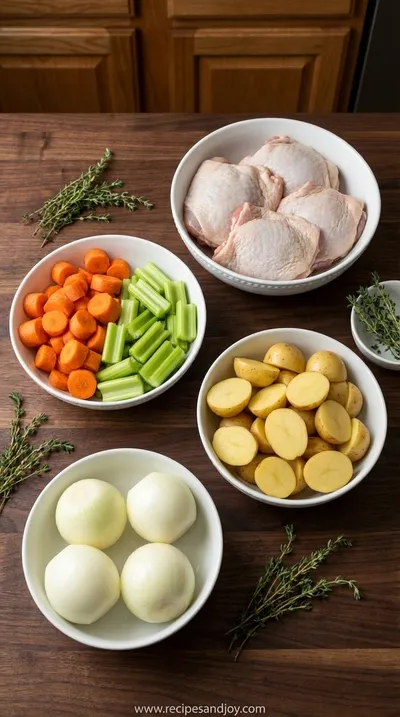
- Boneless, Skinless Chicken Thighs: I almost always reach for chicken thighs in a stew. Unlike breast meat, they have a little more fat, which translates to so much more flavor and a wonderfully tender, succulent texture. They stand up beautifully to the long, slow simmer and never, ever dry out. It’s this forgiving nature that makes them perfect. Look for ones that are plump and have a nice, even color.
- Carrots and Potatoes: These are the humble, hardworking heroes of the stew. I use Yukon Gold potatoes because they hold their shape well but become wonderfully creamy inside. The carrots add a gentle, earthy sweetness that balances the savory broth. I like to cut them into generous, rustic chunks—not perfect little dice. It just feels right for a homey dish like this.
- Fresh Thyme and Parsley: Herbs breathe life into the stew. A few sprigs of fresh thyme added during the simmer release a beautiful, woodsy aroma that perfumes the entire dish. Then, a generous sprinkle of fresh, chopped parsley at the very end adds a pop of bright, clean flavor and lovely color. It’s like a little touch of sunshine on a cloudy day.
Complete Cooking Process
-
Building the Flavor Foundation:
The first steps are all about creating layers of flavor. We start by browning the chicken, which is so much more than just cooking it. This step creates a gorgeous golden crust and leaves behind those delicious browned bits in the bottom of the pot—that’s pure flavor! Then, we soften the onions, carrots, and celery in that same pot. This isn't a process to be rushed; let them get soft and fragrant, releasing their natural sweetness. It's this patient foundation that makes the final stew so incredibly rich and satisfying.
-
The Slow, Gentle Simmer:
Once the vegetables are soft and the garlic is fragrant, it's time to add the liquid and let the magic happen. This is the quiet part of the recipe, where the stovetop does most of the work. You’ll bring it to a gentle simmer, not a rolling boil, and then let it be. The house will start to fill with the most comforting aroma. This slow cooking time is what tenderizes the chicken and vegetables, allowing them to absorb all the wonderful flavors of the broth.
-
Finishing and Thickening:
The final touches are what bring it all together. After about an hour, the stew will be almost ready. This is when we'll create a simple slurry of flour and water to thicken the broth just slightly, giving it a lovely, velvety consistency that coats every bite. Then, we stir in the peas and fresh parsley. The peas add a little pop of sweetness and color, and the parsley brightens everything up. It’s the perfect way to finish, adding a layer of freshness to the deep, savory stew.
-
Don't overcrowd the pot when browning the chicken. Work in batches if you need to; it's the key to getting that beautiful color.
-
Scrape up all the browned bits from the bottom of the pot when you add the broth. This is called deglazing, and it's where so much flavor lives.
-
Taste and adjust the seasoning at the end. The stew's flavor develops as it simmers, so wait until the end to add more salt and pepper if needed.
Pro Tips for a Perfect Stew
These little details make such a difference. They're the quiet secrets to turning a good stew into a great one.
 Sweet Treats & Desserts
No-Bake Protein Energy Balls – Easy Healthy Snack
A simple, no‑bake bite of protein‑packed goodness you can carry anywhere.
Frequently Asked Questions
→ Can I use chicken breast instead of thighs?
You absolutely can, but there are a few things to keep in mind. Chicken breast is much leaner, so it can dry out if cooked for too long. If you use breast meat, I suggest cutting it into larger chunks and adding it in the last 20-25 minutes of simmering, just until it's cooked through. Thighs are just a bit more forgiving and, honestly, I think they add a richer flavor to the stew.
→ My stew isn't thick enough. What can I do?
Oh, that's an easy fix! The simplest way is to make a little slurry. Just whisk together a tablespoon of all-purpose flour or cornstarch with two tablespoons of cold water until it's perfectly smooth. Then, slowly stir that mixture into the simmering stew. Let it bubble gently for a few minutes, and you'll see it thicken up beautifully. Don't add flour directly to the hot stew, or you'll get little clumps, oops!
→ Can I make this chicken stew ahead of time?
Yes, and it's actually even better the next day! Like many stews, the flavors have more time to meld and deepen overnight. Just let it cool completely, then store it in an airtight container in the refrigerator for up to 3 days. Reheat it gently on the stovetop over low heat until it's warmed through. You might need to add a little splash of broth or water if it has thickened up too much.
→ What other vegetables can I add to this stew?
This recipe is so wonderfully versatile! Feel free to add whatever you have on hand. Mushrooms are lovely—sauté them with the onions for a deeper, earthier flavor. Green beans, parsnips, or even some chopped kale stirred in at the end would be delicious. Just be mindful of cooking times; heartier root vegetables will need longer than delicate greens. I encourage you to explore different combinations!
→ Is it possible to freeze this chicken stew?
For the most part, yes, but potatoes can sometimes become a little grainy in texture after being frozen and thawed. It's a minor change, and honestly, most people don't mind it. If you plan to freeze it, let the stew cool completely first. Then, transfer it to freezer-safe containers or bags, leaving a little room for expansion. It will keep well for up to 3 months. Thaw it overnight in the refrigerator before reheating.
→ Can I make this in a slow cooker?
Absolutely, a slow cooker is perfect for this! I would still recommend browning the chicken and sautéing the onions and garlic in a pan on the stovetop first—that step builds so much flavor. Then, transfer everything to your slow cooker, add the remaining ingredients, and cook on low for 6-8 hours or on high for 3-4 hours. Thicken with the slurry during the last 30 minutes of cooking.
→ How do I ensure my chicken is tender?
The secret to tender chicken in a stew is twofold: using the right cut and giving it enough time. As I mentioned, chicken thighs are your best friend here because their higher fat content keeps them moist. The second part is a low and slow simmer. A hard boil can make the meat tough and stringy. A gentle, barely-there bubbling is all you need to break down the connective tissues and make the chicken fall-apart tender. Patience is key!
Nutrition Facts
per serving
410
Calories
38g
Protein
28g
Carbs
15g
Fat
Taste Profile
Deeply savory and rich, with an earthy sweetness from the root vegetables and a fragrant, herbaceous finish.
Ingredient Substitutions
Don't have an ingredient? Try these alternatives
To make this gluten-free, skip adding flour to the vegetables. Instead, at the end, whisk 2 tablespoons of cornstarch with 3-4 tablespoons of cold water and stir it into the simmering stew to thicken.
Red potatoes will hold their shape well, just like Yukon Golds. Sweet potatoes will add a lovely sweetness and color, but they cook a bit faster, so you might want to add them a little later in the process.
Recipe Variations
Try these delicious twists on the original
Creamy Chicken Stew
For a richer, creamier broth, stir in 1/2 cup of heavy cream or full-fat coconut milk during the last 5 minutes of cooking. Just let it warm through, but don't let it boil.
Chicken and Dumpling Stew
Turn this into an even heartier meal by dropping spoonfuls of simple biscuit dough on top of the simmering stew during the last 15-20 minutes of cooking. Cover and let the dumplings steam until they're fluffy and cooked through.
Common Mistakes to Avoid
Learn from others' mistakes for perfect results
- Boiling Instead of Simmering: A vigorous boil can make the chicken tough and the vegetables fall apart. Look for just a few gentle bubbles breaking the surface for a perfect, tender result.
- Not Browning the Chicken: Skipping the browning step means you miss out on a huge layer of deep, savory flavor. That golden crust is essential.
- Adding Flour to Hot Liquid: Never add flour directly to the hot broth. Always coat the vegetables with it first or make a cold water slurry to avoid lumps.
- Under-seasoning: A stew needs a good amount of salt and pepper to bring all the flavors to life. Don't be shy, and make sure to taste and adjust at the end.
Meal Prep & Storage
Make Ahead Tips
This stew is a fantastic make-ahead meal. You can prepare it completely 1-2 days in advance; the flavors will actually deepen and improve overnight. You can also do the prep work ahead of time: chop all your vegetables and store them in an airtight container in the fridge, and cut up the chicken and store it separately. This makes assembly on a busy night so much faster. If you need inspiration, try using the search bar on the website for more ideas.
Leftover Ideas
Leftover chicken stew is such a treat. Reheat it gently on the stovetop over low heat. It's delicious served as is, or you can serve it over rice or egg noodles for a new spin. I also love to shred any large pieces of chicken and use the leftover stew as a base for a quick chicken pot pie by topping it with a puff pastry or pie crust sheet and baking until golden.
Perfect Pairings
Serve this with...
Cooking Timeline
Prep all your ingredients: chop vegetables, cut chicken, mince garlic. Season the chicken.
Brown the chicken in batches in the Dutch oven and set aside.
Sauté the onions, carrots, and celery until softened. Add garlic, then stir in the flour.
Whisk in the chicken broth, then add back the chicken, potatoes, and herbs. Bring to a simmer.
Cover and simmer on low for 60 minutes, letting all the flavors meld.
Stir in the peas and fresh parsley. Taste and adjust seasoning before serving.
 Sweet Treats & Desserts
Healthier Hot Chocolate Recipe
Learn how to make a delicious healthier hot chocolate that's perfect for a cozy warm beverage.
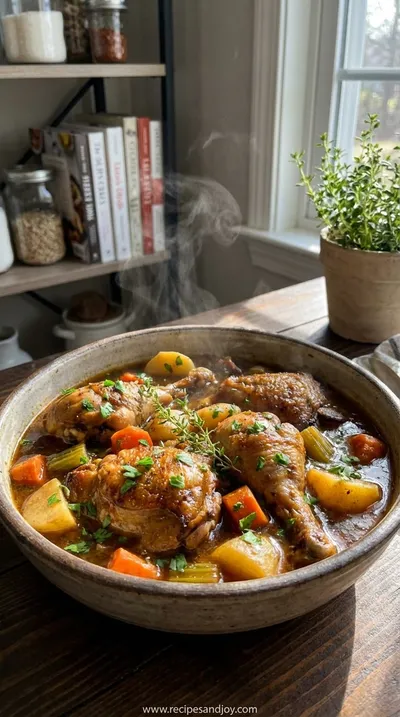
Chicken Stew Recipe: Hearty and Comforting Family Meal
Make this delicious chicken stew with tender meat and vegetables in a rich broth.
Timing
Prep Time
20 Minutes
Cook Time
1 Hour 15 Minutes
Total Time
1 Hour 35 Minutes
Recipe Details
Ingredients
For the Stew
-
01
2 tbsp olive oil
-
02
2 lbs boneless, skinless chicken thighs, cut into 1.5-inch chunks
-
03
1 large yellow onion, chopped
-
04
3 large carrots, peeled and sliced into thick rounds
-
05
2 celery stalks, chopped
-
06
4 cloves garlic, minced
-
07
1/4 cup all-purpose flour
-
08
6 cups low-sodium chicken broth
-
09
1.5 lbs Yukon Gold potatoes, peeled and cut into 1-inch chunks
-
10
2 bay leaves
-
11
1 tsp dried thyme (or 3 fresh sprigs)
-
12
1 cup frozen peas
-
13
1/4 cup fresh parsley, chopped
-
14
Salt and freshly ground black pepper, to taste
Instructions
First, we'll get the chicken ready. Pat your chicken pieces completely dry with a paper towel—this is a small step that makes a huge difference for getting a lovely golden-brown sear. Season them generously all over with salt and pepper. Now, heat the olive oil in a large Dutch oven or heavy-bottomed pot over medium-high heat. The oil should shimmer just a little. Carefully place the chicken in the pot in a single layer, making sure not to crowd it. You might need to do this in two batches. Let the chicken cook undisturbed for about 3-4 minutes per side, until it's beautifully browned. Once browned, transfer the chicken to a clean plate and set it aside for a bit. Don't clean the pot!
Reduce the heat to medium and add the chopped onion, carrots, and celery to the same pot. Oh, that smell is just wonderful, isn't it? Sauté the vegetables, stirring occasionally, for about 8-10 minutes. We want them to soften and for the onions to become translucent. As you stir, gently scrape up any of those flavorful browned bits from the bottom of the pot. Next, add the minced garlic and cook for just another minute until you can really smell it. Be careful not to let the garlic burn. Then, sprinkle the flour over the vegetables and stir constantly for one minute to cook out the raw flour taste. This will help thicken our stew later.
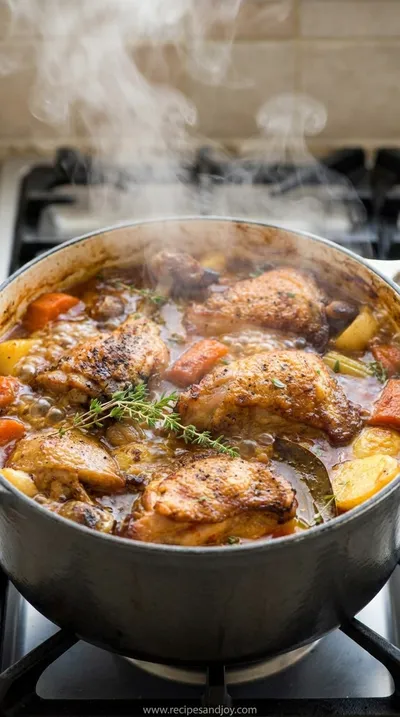
Now it’s time to bring it all together. Slowly, a little at a time, pour in the chicken broth, whisking as you go to ensure the flour dissolves smoothly and there are no lumps. Add the browned chicken back into the pot, along with any juices that have collected on the plate. Toss in the potato chunks, bay leaves, and thyme. Give everything a gentle stir, and bring the liquid to a simmer. Once it's bubbling gently, reduce the heat to low, cover the pot, and let it cook for about 50-60 minutes, or until the potatoes are tender and the chicken is cooked through. The whole kitchen will be filled with the most amazing aroma.
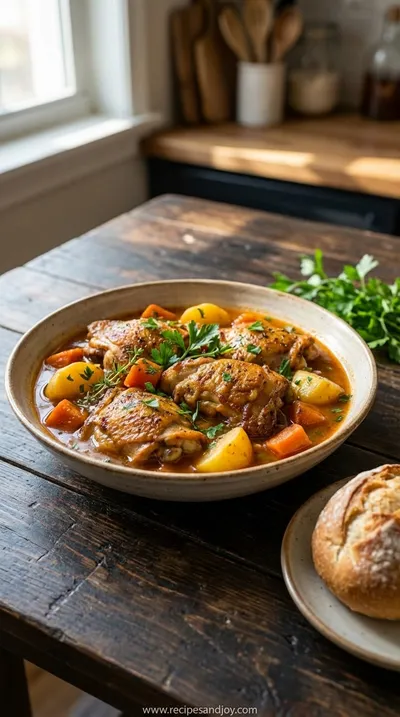
It’s time for the finishing touches. Uncover the pot and remove the bay leaves and any fresh thyme stems. Stir in the frozen peas—they just need a minute or two in the hot broth to cook through. This is also when you taste the stew. Does it need more salt? A bit more pepper? Adjust the seasoning until it tastes just right to you. Finally, stir in the fresh, bright green parsley. Ladle the hot stew into warm bowls and serve it immediately. I love it with a piece of crusty bread for dipping into that incredible broth. It's just perfect.
Notes & Tips
-
1
If you find your stew is a little thinner than you'd like at the end, you can simmer it uncovered for 10-15 minutes to allow some of the liquid to evaporate and the broth to reduce slightly. This will concentrate the flavor as well.
-
2
Feel free to experiment with the herbs! A little bit of fresh rosemary would be a lovely, woodsy addition, or you could stir in some fresh dill at the end for a different kind of brightness. This is your stew, so make it your own.
-
3
For even more flavor, try using a combination of chicken broth and a dry, non-alcoholic white cooking grape juice to deglaze the pan. It adds a wonderful layer of complexity, but honestly, it's just as delicious with broth alone. You can find more cooking tips in my articles.
 Easy Everyday Dinners
French Onion Beef Sloppy Joes – Easy Dinner
Hearty French onion beef sloppy joes with caramelized onions and a savory, sweet sauce.
Tools You'll Need
-
This is truly the star of the show for stew-making. A heavy pot distributes heat evenly, which is perfect for browning the chicken and preventing scorching during the long simmer. The lid helps trap moisture and heat, ensuring everything cooks beautifully.
-
I prefer a wooden spoon for stews. It's sturdy enough to stir the hearty ingredients and perfect for scraping up those precious browned bits from the bottom of the pot without scratching your cookware. It just feels right for a rustic dish like this.
-
A good, sharp knife makes the prep work of chopping all those vegetables feel less like a chore and more like a peaceful, meditative part of the process. It ensures your vegetable pieces are uniform, so they cook evenly.
-
A large, stable cutting board is essential. I like to have one dedicated just for raw meat and another for vegetables to keep things clean and safe in the kitchen. It’s a simple practice that gives me peace of mind.
Must-Know Tips
-
Dry Your Chicken: I know I've said it before, but it's the most important tip! Patting the chicken pieces completely dry with paper towels is the secret to getting a deep, golden-brown sear instead of just steaming the meat.
-
Low and Slow Simmer: Resist the urge to let the stew boil rapidly. A gentle, lazy bubble is all you need. This slow, patient cooking is what makes the chicken incredibly tender and allows the flavors to meld together perfectly.
-
Season in Layers: Don't just dump all the salt in at the end. Season the chicken before browning, and add a pinch of salt with the vegetables. Taste and adjust again at the very end. Building seasoning in layers creates a much deeper, more balanced flavor.

Recipe by
Isabella MooreFood makes every celebration brighter 🎉🍽️ Creating magical seasonal moments with delicious recipes ✨
Get Delicious Recipes Weekly
Join 25,000+ home cooks getting our best recipes straight to their inbox.
Free forever • No spam • Unsubscribe anytime